Knowledge & advice
Air conditioning in a rented home: is it allowed and how do you arrange it?
Having an air conditioner installed in a rented home is possible, but there are a few things you need to bear in mind. As a tenant, you need your landlord's permission for major changes to the property. In this article, we explain what your rights are, when a landlord has to give permission and how best to go about it.
Do you need your landlord’s permission?
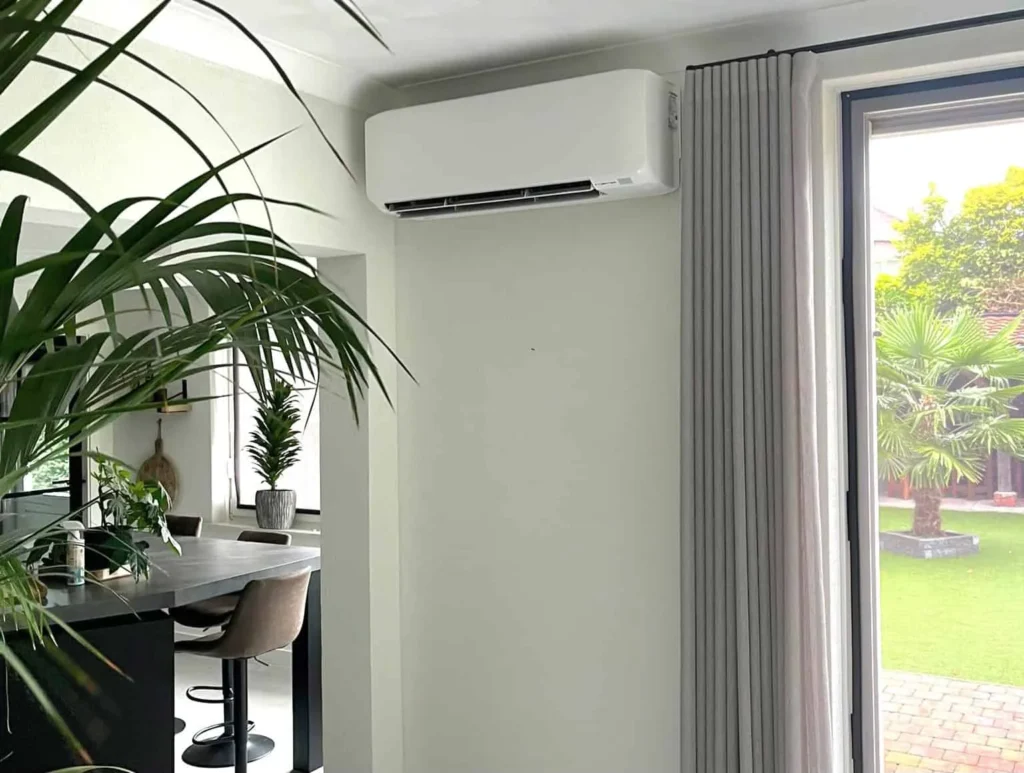
Yes. A split-unit air conditioner requires an outdoor unit on the facade and pipework through the wall, which counts as a structural change to the property. For changes like this, tenants always need written permission from the landlord. Without permission, you risk the landlord charging you for the cost of restoring the property to its original state at the end of the tenancy.
Always ask for permission in writing and keep the landlord’s reply safe. Permission given verbally is hard to prove if a dispute arises later.
When does a landlord have to give permission?
The law does not automatically oblige landlords to give permission for installing an air conditioner. A landlord may refuse permission if the change damages the property, if the change cannot be reversed when you leave, if there are well-founded objections based on the tenancy agreement or house rules, or if the building is a listed monument where the municipality imposes restrictions.
A landlord may not refuse permission without good reason if the change is reasonable, does not structurally damage the property and can be reversed when you leave. In most cases, a split-unit air conditioner is a change that can be reversed when you leave: the outdoor unit is removed, the holes inside are filled and the wall is repaired.
What does the law say about changes to a rented home?
Under Dutch tenancy law, Article 7:215 of the Dutch Civil Code (Burgerlijk Wetboek) provides that a tenant has the right to make changes to the rented home, provided the change can be reversed at the end of the tenancy. For changes that cannot be reversed, the landlord’s permission is always required.
In most cases, a split-unit air conditioner falls into the category of changes that can be reversed. The outdoor unit is removed and the hole through the wall for the pipework is filled. Even so, it is wise to ask for permission for this type of change too, because landlords take different views on it.
How do you ask your landlord for permission?
Send a written request to the landlord or the housing association. Describe what you want to install, where the outdoor unit will be mounted, how the pipework will be routed and how the situation will be restored when you leave. Attach a quote from a certified installer as supporting evidence. This shows that the installation will be carried out professionally and that you have thought through the consequences for when you leave.
Legally, a landlord has a reasonable period to respond. If the landlord does not respond, you can go to the subdistrict court (kantonrechter) after eight weeks to obtain substitute permission.
Making agreements about the end of the tenancy
When permission is granted, make clear agreements about what must happen when you leave. Does the air conditioner have to be removed and the property restored to its original state? Or can the air conditioner stay in place for the next tenant? Put these agreements in writing and keep them safe.
If the landlord agrees to the air conditioner being left behind, it is wise to record whether you will receive compensation for it or whether it stays without compensation.
Air conditioning in social housing
Additional rules often apply to social rented homes owned by housing associations. Many associations have a policy on installing air conditioners, under which permission is usually granted as long as the installation is carried out by a certified installer and the property is restored when you leave. Ask your housing association about its current policy.
Having air conditioning installed in your rented home by Aircobrabant
Aircobrabant installs air conditioners in both owner-occupied and rented homes. During the survey, our advisers deliberately take care of the property and take tenants’ situations into account. We advise on the least invasive installation options and make sure the finish is neat. On request, we will draw up an installation document that you can use with your permission request to the landlord.
Frequently asked questions
Do I need my landlord's permission for an air conditioner?
Yes. A split-unit air conditioner requires an outdoor unit on the facade and pipework through the wall. This is regarded as a structural change for which you always need the landlord's written permission.
Can a landlord refuse permission for an air conditioner?
A landlord may refuse permission if there are well-founded objections, such as structural damage to the property or restrictions under the tenancy agreement or the municipality. A landlord may not refuse permission without good reason if the change is reasonable and can be reversed.
What happens if I install an air conditioner without permission?
If you install an air conditioner without the landlord's permission, you risk the landlord charging you for the cost of restoring the property to its original state at the end of the tenancy. In the worst case, the landlord can also take legal action.
Do I have to take the air conditioner with me when I move out?
That depends on the agreements you have made with the landlord. In most cases, the property has to be restored to its original state, which means the air conditioner is removed and the hole through the wall is filled. Make clear written agreements about this when permission is granted.